

How to Plant Bamboo
Planting bamboo correctly helps the plant establish quickly and develop into a healthy privacy screen. Bamboo is easy to plant and adapts well to many soil types when given proper watering and care during establishment.
Choosing a Planting Location
Most bamboo varieties grow best in full sun to partial shade. Choose a planting site that allows enough space for the bamboo to reach its mature height and width.
- Ensure the planting area drains well
- Allow room for the bamboo to develop a hedge
- Avoid locations where water collects
Preparing the Soil
Bamboo grows well in a wide range of soils but performs best in soil that is rich in organic matter. Before planting, loosen the soil and remove weeds or debris from the planting area.
Many growers mix compost into the soil when planting bamboo to improve drainage and provide nutrients for early root development.
How to Plant Bamboo
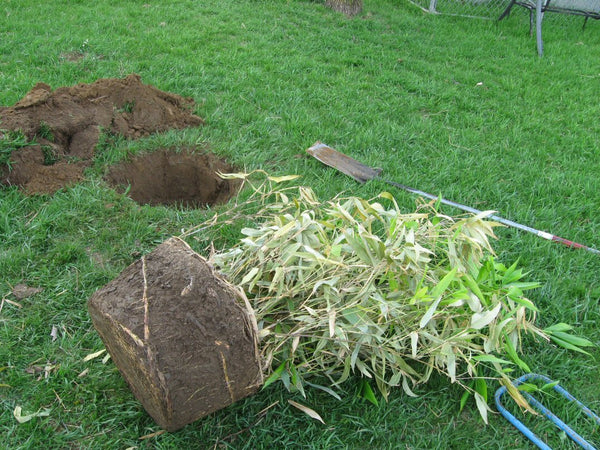
- Dig a hole about twice as wide as the nursery container.
- Place the bamboo so the top of the root ball is level with the surrounding soil.
- Backfill the hole with soil and gently firm it around the roots.
- Water thoroughly while filling the hole to eliminate air pockets.
- Add mulch around the base of the plant.
A helpful planting technique is to run a garden hose into the hole while backfilling soil. This floods the planting hole and removes air pockets that can damage roots.
Use Recharge When Planting Bamboo
One of the best things you can do when planting bamboo is apply beneficial soil microbes to the root zone. Recharge is a microbial soil conditioner that contains beneficial bacteria, fungi, and mycorrhizae that help stimulate root growth and improve nutrient uptake.
Applying Recharge at planting helps bamboo establish faster by encouraging a healthy soil ecosystem around the root system. These beneficial microbes support root development, improve soil biology, and help young bamboo plants transition more quickly after transplanting.
To apply Recharge during planting, mix a small amount with water and apply it directly to the root ball and surrounding soil after the plant has been installed. This allows the beneficial microbes to immediately colonize the root zone.
For best results, apply Recharge when planting and again during the growing season to maintain healthy soil biology.
Watering Newly Planted Bamboo
Watering is the most important factor when establishing bamboo. Newly planted bamboo should be watered regularly during the first growing season.
- Water deeply after planting
- Keep the soil evenly moist during establishment
- Reduce watering once the plant becomes established
Fertilizing Bamboo After Planting
Bamboo is one of the fastest-growing plants on earth and benefits from regular fertilization. Providing the right nutrients encourages faster growth, stronger culms, and dense foliage for privacy screens.
We recommend using a high nitrogen slow-release fertilizer designed specifically for bamboo. Our Bamboo Special 13-5-11 High Nitrogen Slow Release Fertilizer provides balanced nutrition and releases nutrients gradually throughout the growing season.
Slow-release fertilizer helps maintain consistent nutrient availability for bamboo while reducing nutrient loss from heavy rain or watering.
Spacing Bamboo for Privacy Hedges
Clumping bamboo used for privacy screens is typically planted 3–5 feet apart depending on the species and how quickly you want the hedge to fill in.
Closer spacing results in a faster privacy screen, while wider spacing allows each plant more room to mature.